Chinese Hybrid Cars: HEV vs PHEV and What Buyers Should Check
2026-10-14 16:55:50
Chinese hybrid cars use more than one type of powertrain, and the first question for a buyer is whether a vehicle is a conventional hybrid electric vehicle (HEV) or a plug-in hybrid electric vehicle (PHEV). An HEV combines an engine and electric propulsion without routine external charging. A PHEV has a rechargeable battery intended for charging from an external source and may offer a useful electric-driving range, depending on its design. Neither label alone tells you how much fuel a vehicle will use in your market.
Importers and dealers should match the powertrain to local charging access, trip patterns, service support and the exact vehicle version. Jansbon Car, a China-based vehicle sourcing and export service provider, lists a specific used 2022 Geely Xingyue L Thor Hi·F HEV that illustrates why model-level specifications matter.
What Are the Main Types of Chinese Hybrid Cars?
The word hybrid describes a vehicle that combines combustion power with some form of electric assistance or propulsion. It does not specify battery size, charging method, or how long the car can travel using electricity alone. Buyers should distinguish the following configurations before comparing listings.
Hybrid Electric Vehicles (HEVs)
A conventional full HEV manages its engine, motor and battery through onboard controls. The battery is typically charged through regenerative braking and engine-driven generation rather than a plug. Electric assistance can help in stop-start driving, but the extent of electric-only operation varies. The vehicle still needs fuel, so a conventional HEV may be practical where reliable public or home charging is unavailable.
Plug-in Hybrid Electric Vehicles (PHEVs)
A PHEV can be charged from an external electricity supply. Some trips may be completed primarily using battery power if the battery has sufficient charge and the driving conditions permit. Once battery charge is depleted, the vehicle’s control system manages the engine and remaining electrical assistance. Actual electric range and fuel consumption depend on vehicle specification, temperature, driving load, speed and the charging routine; a brochure range should not be interpreted as a daily guarantee.
How Mild Hybrids Differ
A mild hybrid (MHEV) commonly uses a smaller electrical system for engine assistance, starting and energy recovery. It generally cannot operate as a conventional full-electric vehicle. A listing described merely as “hybrid” therefore needs clarification before it can be grouped with full HEVs or PHEVs.
| Powertrain | External charging | Typical decision point |
|---|---|---|
| HEV | Not normally required or supported | Fuel-based operation with electric assistance |
| PHEV | Supported and important to its intended use | Access to suitable charging and daily electric-driving opportunity |
| MHEV | Usually not supported | Limited electrical assistance, not full hybrid-electric driving |
HEV vs PHEV: Which One Fits Your Driving Conditions?
There is no universal winner. A buyer comparing Chinese plug-in hybrid cars with conventional HEVs should first document the real use case, not only the advertised driving range.
Markets with Limited Charging Access
Where dependable charging is difficult to arrange, a conventional HEV avoids the need to organize a daily plug-in routine. It remains subject to fuel availability, maintenance needs and the suitability of its electronic systems. A PHEV can still operate without frequent charging in many cases, but a buyer should not assume it will retain the same efficiency advantages when the charging feature is rarely used.
Frequent Short Trips with Reliable Charging
A PHEV can be worth evaluating for frequent predictable journeys when a compatible charger is available and its usable electric range matches those journeys. Before choosing, verify connector specifications, local electrical requirements, battery and charging documentation, and whether service support exists in the destination market.
Long-Distance and Mixed Driving
Highway driving, steep grades, passenger load and air-conditioning demand all affect energy use. If buyers compare two vehicles, they should ask for consumption figures measured under the same test procedure and for the same type of powertrain. It is misleading to compare an HEV’s gasoline-only rating directly with a PHEV’s weighted consumption figure without describing the test conditions.
| Operating situation | Reasonable starting point | Verify before choosing |
|---|---|---|
| Infrequent or unreliable charging | Evaluate HEV practicality | Fuel quality, service capability and local parts |
| Short routine journeys plus reliable charging | Evaluate PHEV electric operation | Usable range, charging standard, battery condition |
| Mixed urban and highway use | Compare exact vehicle configurations | Test-cycle basis, load and driving pattern |
What Do Hybrid Vehicle Specifications Really Tell Buyers?
Engine Power and Combined System Output
Engine-rated power is not the same as total hybrid-system output. Electric motors and combustion engines may peak at different speeds and operating points, and the car’s control system limits the combined output. Do not add two catalog power ratings together to invent a system figure. Compare the manufacturer’s specifically stated system rating for the exact variant.
Battery Capacity, Range and Charging
For a PHEV, distinguish gross battery size, usable battery energy, charging power, charge time and tested electric range. For an HEV, a large published electric range may not be applicable at all. Battery-health reports on used vehicles also need the test method and identifying details; dashboard range estimates are not a substitute for an assessment of battery condition.
Fuel-Consumption Test Standards
NEDC and WLTC are different standardized test procedures. A vehicle’s published NEDC result should not be treated as directly equivalent to the WLTC value for another model. Real consumption can vary substantially with temperature, traffic, terrain and driving style. Ask the supplier to retain the test-cycle label whenever a figure is quoted.
A Real Vehicle Example: 2022 Geely Xingyue L HEV
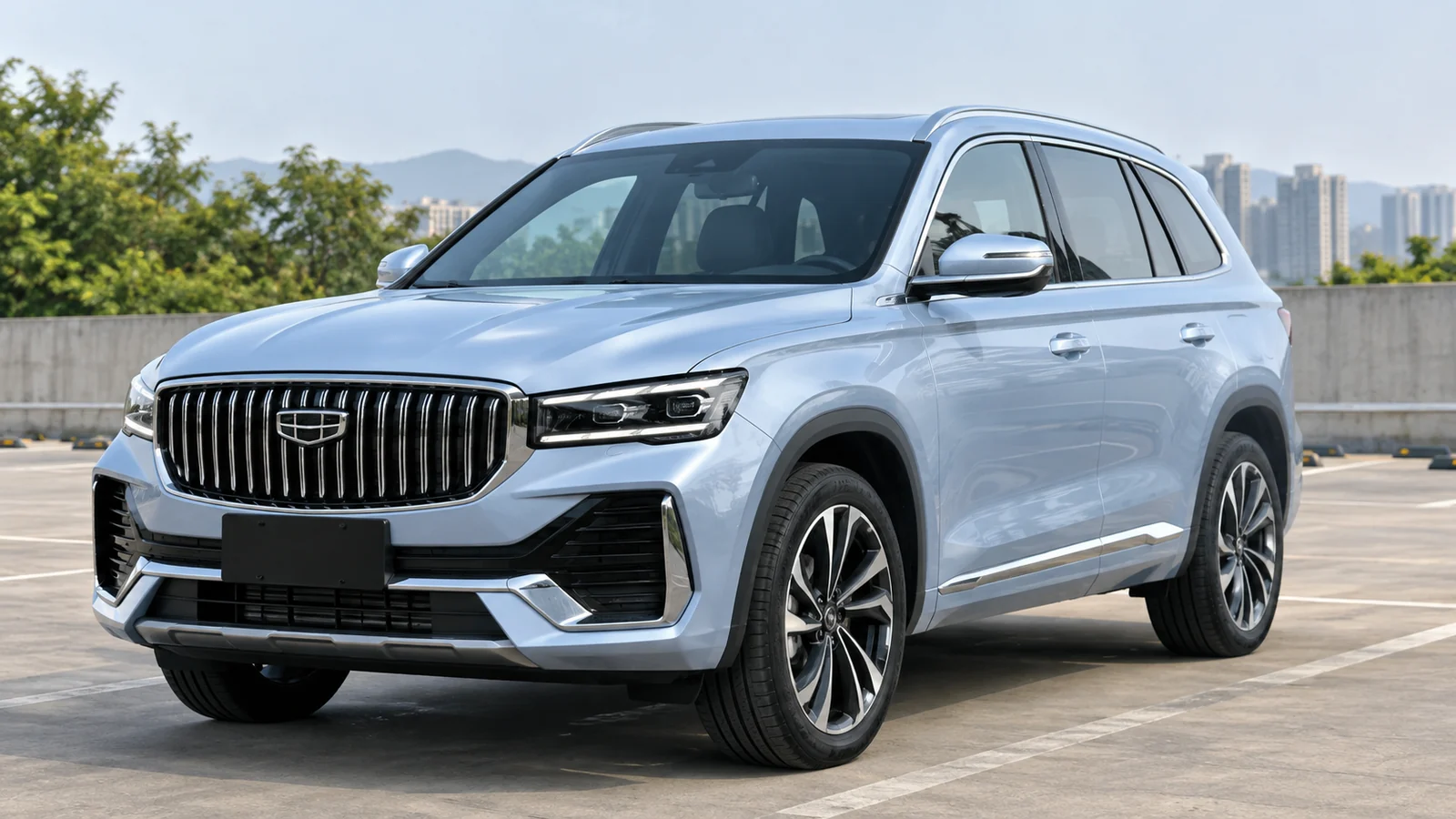
Jansbon Car’s listing for the Geely Xingyue L 2022 1.5T Thor Hi·F HEV Super Xun identifies it as a non-plug-in gasoline HEV, rather than a PHEV. That one distinction changes the infrastructure checklist: routine external battery charging is not part of this vehicle’s specified operating concept.
| Published item | Specific 2022 version | Why to check |
|---|---|---|
| Powertrain | 1.5T gasoline hybrid, HEV | Confirms non-plug-in type |
| Transmission | 3-speed DHT Pro | Identifies the variant’s drivetrain |
| Driven wheels | Front-wheel drive | Useful for road-use planning |
| Body | Five-door, five-seat SUV | Passenger and body configuration |
| Dimensions (L × W × H) | 4770 × 1895 × 1689 mm | Shipping and vehicle-fit planning |
| Published fuel consumption | 4.3 L/100 km (NEDC) | Test-cycle figure, not real-world guarantee |
These are the details of the named listing, not a claim that every Xingyue L, Geely hybrid or vehicle sourced by Jansbon has identical specifications. Compare other Geely models by version rather than by brand badge alone. Jansbon offers sourcing communication and vehicle information; the vehicle brand and the export service provider are separate entities.
What Should International Buyers Verify Before Sourcing Chinese Hybrid Cars?
For used Chinese hybrid cars, powertrain identification is the starting point. Before agreeing to a specific vehicle, request supporting information that connects the listing to an identifiable car and a legal destination-market route.
- Exact version: model year, trim, VIN, HEV or PHEV designation, engine and transmission specifications.
- Vehicle condition: mileage evidence, service history, accident and repair disclosures, and an appropriate inspection of the powertrain and high-voltage components.
- Battery evidence: when relevant, diagnostic findings and the method of battery-health assessment rather than a guessed remaining life.
- Charging information: for PHEVs, connector standard, supply compatibility, required charging equipment and operating instructions.
- Destination suitability: import rules, registration standards, parts and workshop support, and any required conformity or export documents for that country.
A dealer may be sourcing a single sample vehicle or evaluating a larger procurement program. Either way, specifications shown on a public listing need confirmation against the actual vehicle offered. Jansbon Car’s role is to support sourcing and export coordination; that does not itself verify a particular vehicle’s condition or establish its eligibility for every destination.
Frequently Asked Questions About Chinese Hybrid Cars
Can a conventional HEV be charged from a wall socket?
Ordinary non-plug-in HEVs are not designed for external charging. Check the exact powertrain designation before assuming a charging port is present.
Do all Chinese hybrid cars offer electric-only driving?
No. MHEVs, full HEVs and PHEVs provide different capabilities. Electric-only operation, where possible, depends on vehicle design and operating conditions.
Can the same hybrid model have different specifications in different markets?
Yes. Model year, trim and destination-market variants may change powertrains, equipment and standards. Always match specifications to a precise version and vehicle identification.
Final Considerations
For Chinese hybrid cars, start with the HEV/PHEV distinction, then match the exact vehicle to charging access, expected driving, maintenance and destination requirements. The listed Geely Xingyue L HEV is a useful non-plug-in example, not proof of availability of every hybrid configuration. If you have an intended year, model, budget and destination country, share your hybrid vehicle requirements with Jansbon Car to discuss sourcing information and the documents to verify before purchase.