Chinese Electric Cars for Export: GB/T vs CCS2 Charging Compatibility
2026-10-23 16:13:31
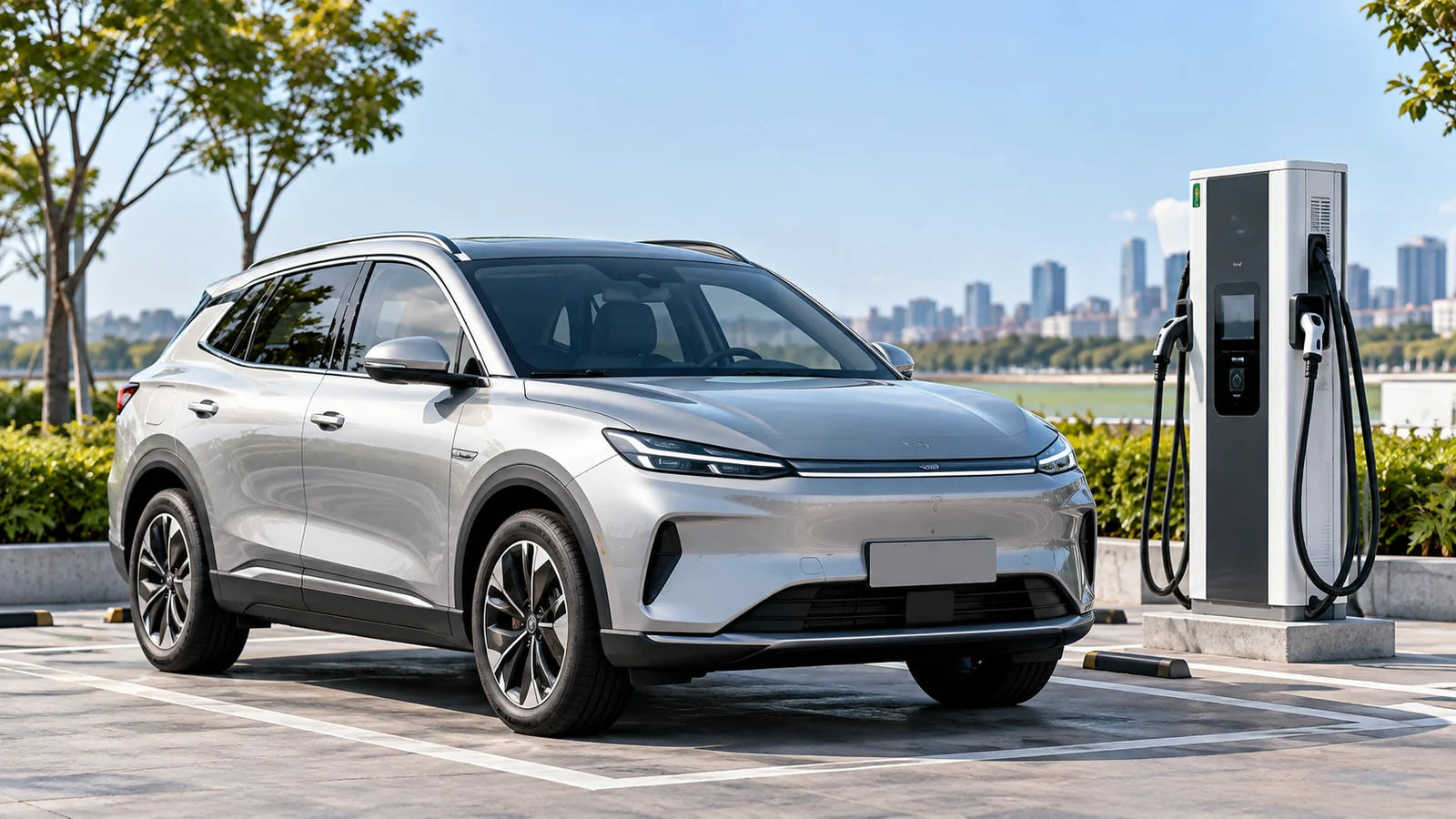
Chinese electric cars do not automatically work with every charging station overseas. A vehicle built for the Chinese domestic market may have a GB/T charging inlet, while many public chargers in Europe use Type 2 for AC charging and CCS2 for DC fast charging. The difference is more than the shape of the plug: the vehicle and charger must also agree on electrical limits and how charging is controlled.
For importers, the safe starting point is the exact vehicle version and its actual charging inlet, not the badge on the hood or the range printed in an advertisement. This guide explains the GB/T and CCS2 systems, what an adapter can and cannot prove, and the evidence to request before buying a Chinese EV for an overseas market.
Which Charging Connectors Do Chinese Electric Cars Use?
China’s GB/T system defines charging connections for vehicles supplied to its domestic market. GB/T 20234.2-2015 covers the AC charging interface, while GB/T 20234.3-2023 covers the conventional DC charging interface. These describe different functions; an importer should never ask for a single vague answer such as “the car supports GB/T” without distinguishing AC from DC.
A Chinese brand can also sell an export-market version designed for another charging system. For example, a vehicle described as a BYD Yuan PLUS in China may share much of its body design with an overseas-market version, but that resemblance does not establish identical charging hardware, software or market approval. Charging configuration must be confirmed at the vehicle-version level and, for used cars, at the individual-unit level.
Start with a clear photograph of the charging inlet with its protective caps open, followed by the vehicle’s original specification or build information. Check both AC and DC capability separately. A public-charge-point map or a model-family brochure cannot replace those records.
GB/T vs CCS2: What Is Actually Different?
European public charging equipment commonly uses a Type 2 interface for AC charging and CCS Combo 2 (CCS2) for DC charging. The combined CCS2 inlet adds DC contacts to the Type 2-based arrangement. China’s conventional GB/T AC and DC connections follow their own interface standards instead. The standards also involve control and communication requirements, so fitting a plug is not enough to prove that a charging session can start.
| Comparison | China-market GB/T | European Type 2 / CCS2 |
|---|---|---|
| Normal AC charging | GB/T AC inlet and compatible equipment | Type 2 vehicle interface and compatible equipment |
| DC rapid charging | GB/T DC inlet and associated control/communication | CCS2 DC contacts and associated control/communication |
| Connector fit | Not directly interchangeable with CCS2 by assumption | Not directly interchangeable with GB/T by assumption |
| What else to verify | Electrical rating, communication, safety features, vehicle version | Electrical rating, communication, charger and vehicle compatibility |
| Buyer evidence | Unit photos, genuine vehicle specifications, supported charging modes | Destination charger specifications and proven compatibility |
AC Charging Is Not the Same Question as DC Charging
AC equipment supplies alternating current, and the vehicle’s onboard charger converts it for the battery. DC fast charging supplies controlled DC power through a different charging arrangement. A solution that addresses one interface does not automatically solve the other. Ask suppliers to state supported AC input and supported DC charging separately, including relevant electrical and control limits.
Communication Matters as Much as the Contacts
Before DC power flows, the vehicle and charging equipment must exchange the information needed to manage a safe session. Chinese GB/T DC charging and CCS2 use different communication approaches. An object sold as a “GB/T to CCS2 adapter” may be only a physical connector, or may contain electronics intended for protocol conversion. Neither a product photograph nor a marketing description proves that it works with the vehicle, charging station, software version and destination rules in question.
Can a GB/T Electric Car Charge at a CCS2 Station?
Not directly, unless a specifically verified charging solution makes the vehicle and station compatible. A GB/T-equipped car cannot be assumed to fast-charge at a CCS2 station simply because a conversion plug is available online. The connection needs appropriate mechanical design, electrical ratings, charging communication and safety interlocks.
There are three possible purchasing outcomes. A vehicle supplied with a native connector that matches the destination network has the clearest path, subject to normal vehicle and charger checks. A vehicle that requires an external conversion device needs documented compatibility for the exact car and station arrangement. If the required evidence is missing, compatibility should remain unconfirmed—not be turned into a promise on a sales quotation.
The same caution applies to portable AC charging equipment. Check the supply voltage, earthing arrangement, cable rating, charging equipment approval and what is supplied with the vehicle. Do not modify high-voltage vehicle wiring, defeat interlocks or attempt an improvised charging test to make an incompatible vehicle work.
How Should Importers Check Charging Compatibility Before Shipping?
An effective check links every claim to a specific vehicle. A model-level statement such as “supports fast charging” does not tell the buyer which international stations the supplied unit can use. Ask for the following evidence before a quotation is treated as final.
| Check | Evidence to request | What it tells the buyer |
|---|---|---|
| Exact car and version | VIN or identifiable unit reference, full model/trim and target-market configuration | Which physical vehicle the claim covers |
| Charging inlet | Clear AC and DC charging-port photographs, if both modes are present | Physical connection type on the supplied car |
| AC capability | Original vehicle specification and equipment list | Onboard charging modes and input conditions |
| DC capability | Original vehicle specification or verified technical record | Supported fast-charging interface and limits |
| Included equipment | Photos and ratings of cables, portable EVSE and any proposed conversion device | What the buyer will actually receive |
| Destination network | Charger model, connector, electrical specification and operator guidance | What infrastructure the vehicle must work with |
| Compatibility evidence | Qualified supplier documentation or a properly documented compatible test, where available | Whether the proposed solution has been verified |
For a practical model reference, Jansbon Car lists a used 2024 BYD Yuan PLUS 430KM Leading Edition and a 2024 BYD Yuan UP electric SUV. Their product pages help buyers identify models for inquiry; neither page, by itself, establishes that a particular unit has a CCS2 charging inlet or verified compatibility with a foreign public charging network.
When requesting a vehicle, refer to its precise edition and ask Jansbon for unit-specific charging-inlet photographs and any available technical documentation. The model’s advertised driving-range label is not evidence of connector compatibility.
Does Charging Compatibility Mean the Car Can Be Registered Overseas?
No. Being able to connect to a charging station and being legally importable or registrable are separate tests. Destination markets can have requirements covering vehicle approval, roadworthiness, lighting, safety systems, identification, documentation, customs and registration. An export-market charging connector alone is not proof of type approval.
For EU buyers, vehicle approval and any applicable individual-approval route must be checked separately against the actual vehicle and the destination authority’s requirements. For other markets, use the relevant national import and registration rules rather than assuming that European charging practices apply everywhere. The result may depend on whether the transaction concerns a previously registered vehicle, an approved export specification or a domestic-market unit.
A Final Charging Checklist for Chinese EV Imports
- Identify the precise car, market version and VIN or unit reference.
- Record the real AC and DC charging connectors, not merely the model name.
- Confirm the vehicle’s electrical and communication requirements against the target charging equipment.
- Treat any GB/T-to-CCS2 conversion proposal as unverified until the full arrangement is supported by credible technical evidence.
- Check what charging cables and equipment are included in the transaction.
- Confirm vehicle import and registration requirements separately from charging compatibility.
The right Chinese electric car for an overseas buyer is one whose actual delivered configuration fits the intended charging and regulatory environment. To compare available models, review Jansbon Car’s BYD vehicle listings. If you have a target model, destination country and charging-network requirement, contact Jansbon Car with those details and request confirmation of the unit-specific information that can be supplied before purchasing.